Discover what happens when you leave a gap from a missing tooth, and how to stop the damage permanently.
 Many people have a tooth extracted and assume the issue is resolved — but the reality is that the true damage begins after the extraction, not before.
What Happens to Your Mouth After a Tooth Extraction?
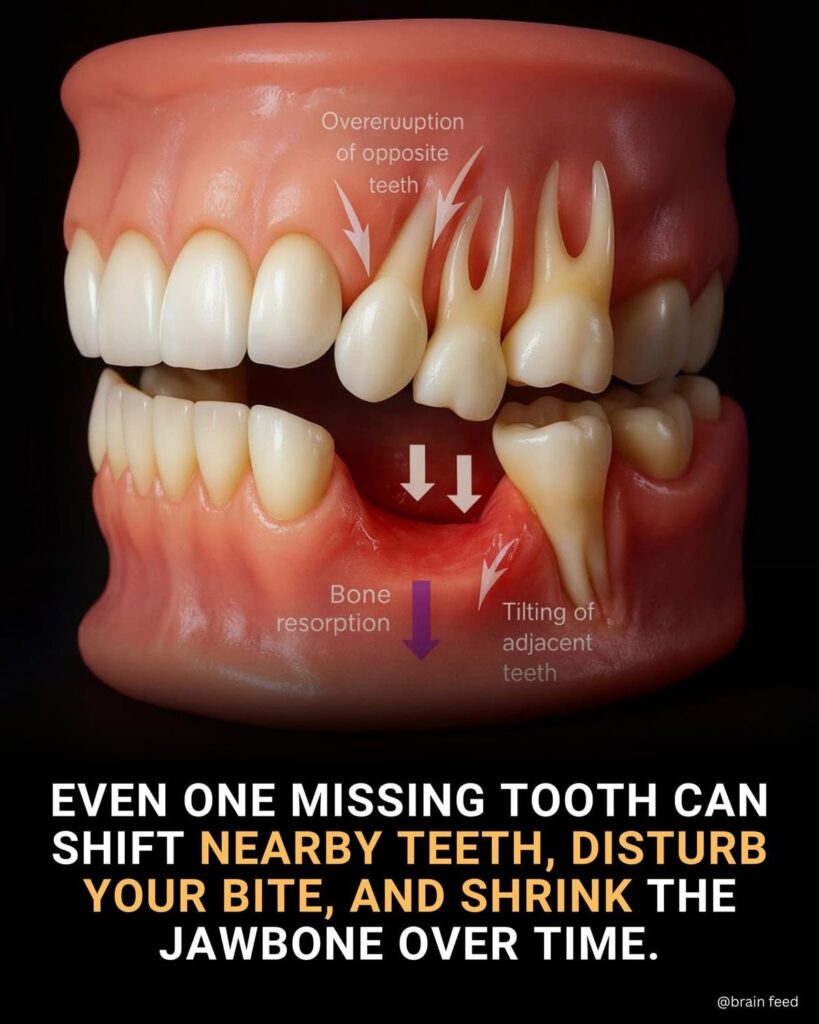
Teeth are not just for chewing — every single tooth plays a vital structural role in maintaining the balance of your entire mouth. When you extract a tooth and do not replace it, a chain of progressive changes begins, affecting everything around it:

Shifting of Adjacent Teeth:
The teeth on either side of the gap gradually lean toward it, causing misalignment in your dentition.
Overeruption of the Opposing Tooth:
The tooth directly above or below the gap begins to move vertically out of its socket in search of an opposing surface, which alters your bite.

Jawbone Resorption (Atrophy):
Without the tooth root, the bone in that area lacks stimulation and gradually deteriorates, which can eventually impact your facial features.
Bite Misalignment (Malocclusion):
The shifting of teeth creates uneven pressure on the temporomandibular joint (TMJ), potentially leading to chronic pain.
The Timeline of Damage
The Timeline of Damage: Every Passing Day Increases the Risk
الضرر مش فجأة — بيحصل ببطء على مدى أشهر وسنين، وعشان كده كتير من الناس مش بتلاحظة للأسف إلا لما يتأخر الوقت
⚠️
Dental studies confirm that the jawbone can lose up to 25% of its volume in the first year alone following an unreplaced extraction.
Within the First 3 Months
The bone at the extraction site begins to resorb, and adjacent teeth start to shift slightly
From 3 to 12 Months
The opposing tooth begins to overerupt, the shifting becomes noticeable, and TMJ joint discomfort may begin.
After 1 Year and Beyond
Significant bone loss occurs, leading to subtle changes in facial features, chewing difficulties, and complete disruption of dental alignment.
Why Dental Implants Are the Ideal Solution؟
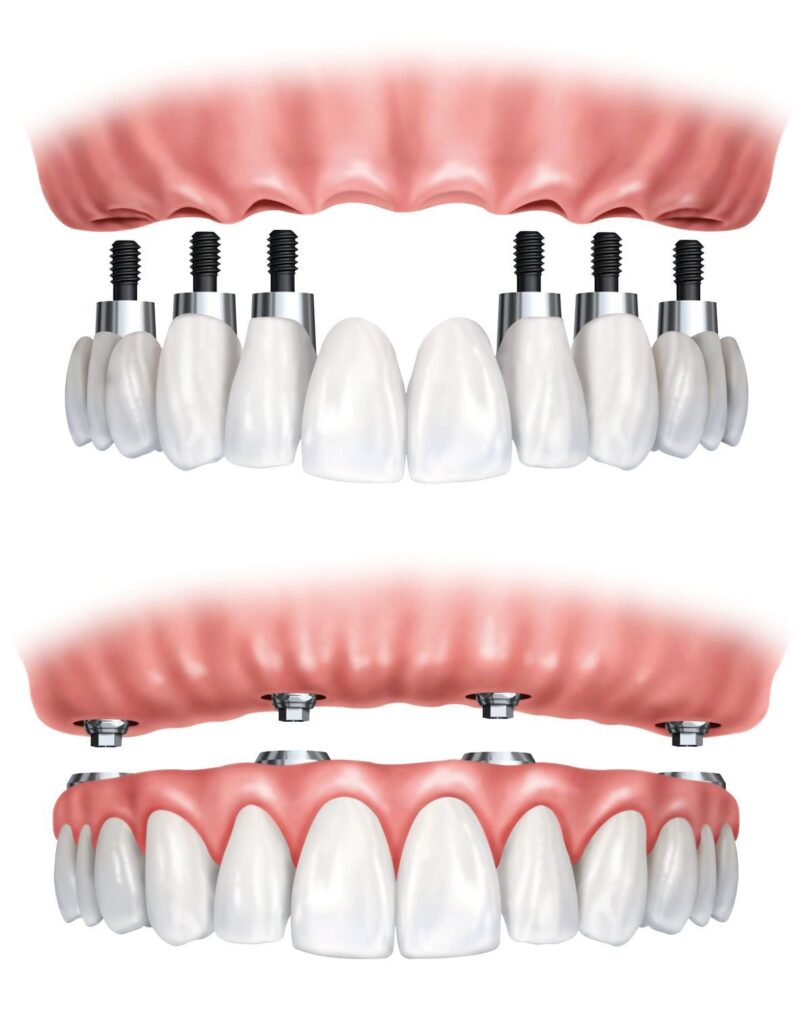
Unlike removable dentures or fixed bridges, dental implants are the only option that replaces the natural tooth root itself, not just the visible crown on top
- Stops Bone Loss Immediately: Implants stimulate the bone exactly like a natural root, keeping the jawbone healthy and preserved.
- Prevents Shifting of Neighboring Teeth: By filling the gap, adjacent teeth have no room to shift and remain perfectly in place.
-
A Lifetime Solution: Titanium implants biocompatibly fuse with the bone, lasting for decades with proper care.
- 100% Natural Feel: You can eat, laugh, and speak with absolute confidence — just as if your original tooth were still there.
- Zero Impact on Neighboring Teeth: Unlike fixed bridges, implants do not require grinding or damaging the healthy adjacent teeth.
Is the dental implant procedure painful?
The procedure is performed under complete local anesthesia, ensuring the patient feels no pain during the process. Afterward, any mild discomfort for a few days can be easily managed with standard prescribed medication.
How long should I wait between extraction and implantation?
In many cases, immediate implants can be placed during the exact same extraction session. In other scenarios, we wait 3 to 6 months depending on the bone condition — your doctor will determine the most suitable approach for you.
Do implants succeed if a long time has passed since the extraction?
Yes, they succeed in the vast majority of cases. However, if significant bone resorption has occurred, a bone grafting procedure may be required first. This is why the earlier you act, the simpler and more cost-effective the treatment is.
What is the difference between Korean, German, and Swiss implants?
Each type has its own specifications and advantages. German and Swiss implants are globally renowned for their premium manufacturing precision, while Korean implants offer excellent, highly reliable results at a more competitive price point. At Al-Tarek Center, we provide all types and select the absolute best fit for each patient's specific case.
Tooth extraction isn't the end of the road. At our center, dental implants are performed using the latest digital technologies, ensuring a precise, pain-free experience. Book your consultation today for a personalized treatment plan.
Click HereEXCELLENTTrustindex verifies that the original source of the review is Google. Perfect experience and professional doctor I recommend the place to everyonePosted onTrustindex verifies that the original source of the review is Google. مركز الطارق يعني الجوده الدقه الامان والأخلاق العاليةPosted onTrustindex verifies that the original source of the review is Google. دكتور طارق من اشطر دكاترة الاسنان اللي اتعامل معاهم ومن انضف المراكز في اسماعيليه حقيقي ماشاءالله عليهمPosted onTrustindex verifies that the original source of the review is Google. بصراحة من أحسن التجارب الطبية اللي درتها في مصر. دكتور شاطر، صبور، وكيشرح كل حاجة بهدوء. حسّيت بالراحة والثقة من أول مقابلة. العيادة نظيفة والاستقبال محترم. ربنا يبارك لكم المركز موجود في الإسماعيلية والتجمع. تحية من المغربPosted onTrustindex verifies that the original source of the review is Google. دكتور طارق حقيقي من اشطر دكاترة الاسنان في اسماعيليهShowing our latest reviews